Written by Krista Looney P.E.
Last updated: 16 May 2025
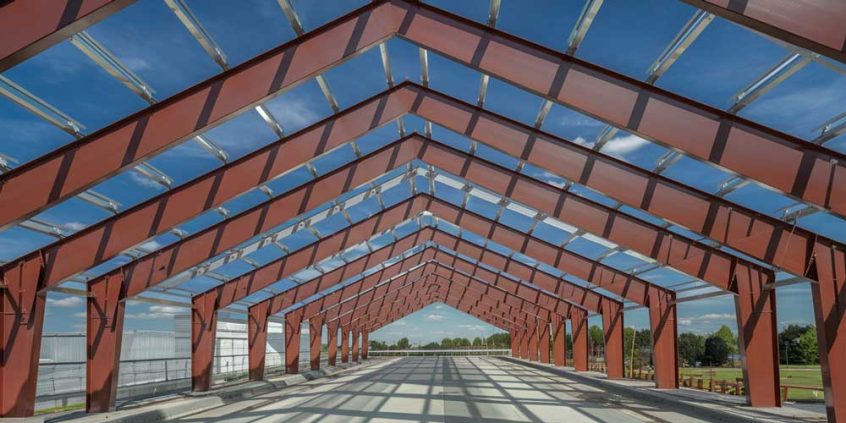
Whether you’re interested in a metal building for residential, commercial, or agricultural use, you’ve undoubtedly encountered the term “red iron building” in your research.
“Red iron” (RI) buildings are pre-engineered metal buildings (PEMB) designed with tapered I-beam frames that create a gabled or single slope roof, allowing for large clear spans between interior columns. These buildings are primarily constructed from steel coated with a red oxide primer to protect against rust and corrosion. The term “red iron” specifically describes the color of the steel after the primer has been applied.
Red iron refers to steel coated with a red oxide primer. This coating protects the steel from rust and corrosion, making it a popular choice in construction, especially for structural beams and columns. The iron oxide primer gives the steel its distinctive red color.
Steel is a man-made alloy composed primarily of iron with varying amounts of carbon, which results in a stronger, more durable, and more cost-effective material than pure iron.

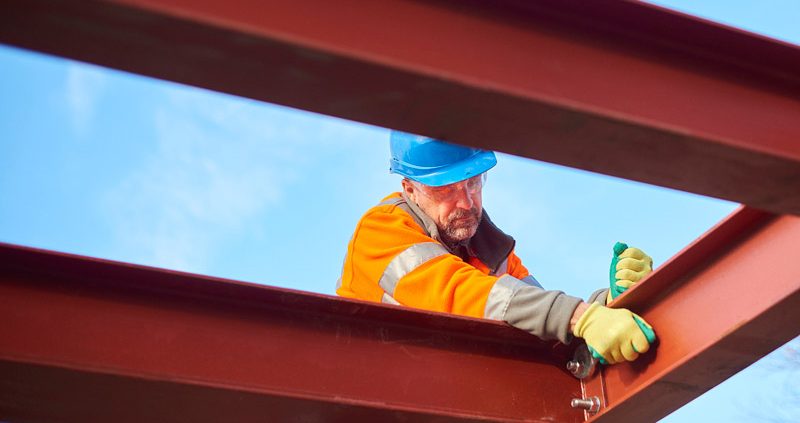
Bolt-up metal framing
While “red iron” can be a misleading name for these steel building kits, it’s such a common term in the metal building industry that we will continue to use “red iron building” throughout this article. However, as you explore other websites and resources, you may also hear them referred to by one of the following:
If you study the frame of an RI structure, you’ll notice the tapered I-beam members are thickest (and therefore the stiffest) at the joints between the rafters (primary roof members) and columns (primary vertical members). RI structures rely on these fixed joints (also called “moment connections”) to resist loads like snow, wind, and earthquakes, hence the name “rigid frame.”
A portal frame can be another name for the rigid frame described above.
PEMB can refer to any metal building with steel/metal frames supporting metal wall and roof panels. All components are tailored for site-specific conditions, pre-manufactured off-site, and shipped as a kit for erection. Technically, this term could cover other building types, such as cold-formed; however, since RI buildings have historically been the predominant metal building type, “pre-engineered metal building,” or “PEMB,” likely references this building style with tapered I-beam rigid frames.
These structures are sometimes called I-beam buildings because they are constructed from ‘I’-shaped framing members (as indicated above).
A structural steel building is made primarily from structural steel components designed to carry loads and provide stability. These components include beams, columns, trusses, and rigid-frames, fabricated to precise specifications and assembled to form the framework of the building. Structural steel is valued for its high strength-to-weight ratio, durability, and flexibility, allowing for large, open spaces and complex architectural designs.
These buildings are commonly used in construction projects such as skyscrapers, warehouses, industrial facilities, bridges, and sports stadiums. Structural steel buildings are engineered to meet specific safety, durability, and load-bearing requirements, making them a reliable choice for various applications.
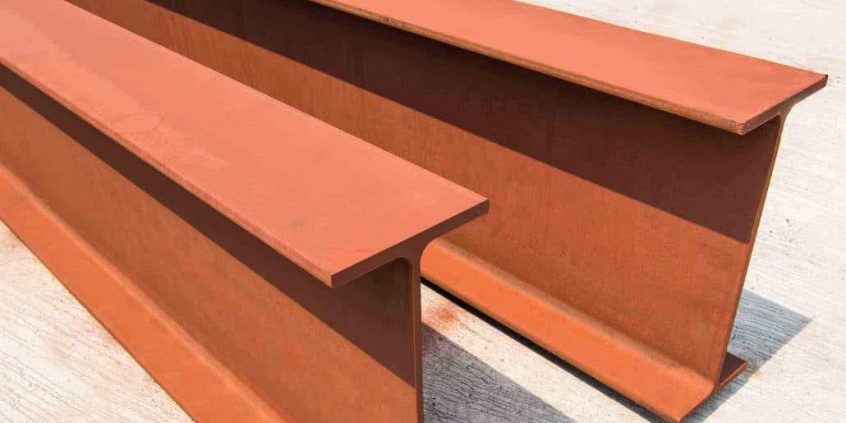
Steel I-beam
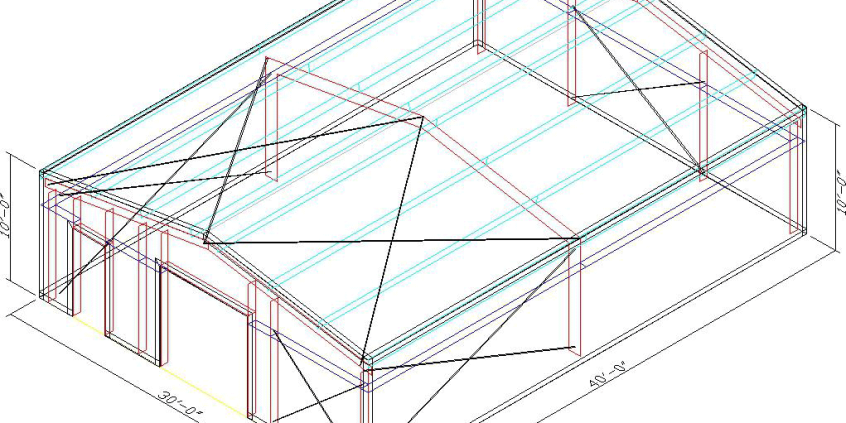
The rigid frames are the main system resisting gravity loads and in-plane wind and seismic. Continuous purlins (roof) and girts (wall) span from frame to frame at 5-7 feet on center, tying the frames together and supporting the metal roof and wall panels.
RI buildings also require additional framing, including end wall posts and corner columns to support the ends of the building, eave struts along the roof/wall joint, and jamb and header framing around openings.
They also require additional lateral stability perpendicular to the main frames. This is often accomplished with tension x-bracing or cables running diagonally between adjacent frames from slab to eave and between rafters.
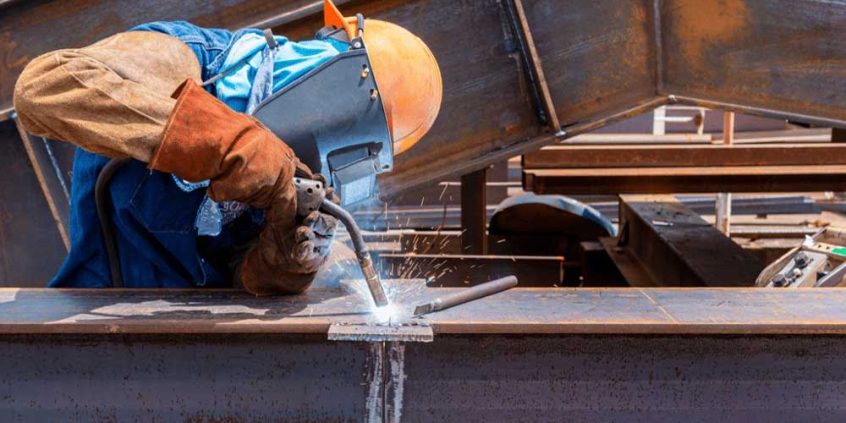
Structural steel buildings are versatile and used in commercial and industrial construction. They use high-strength steel sections like I-beams, H-beams, and channels to provide a solid framework that is welded together on-site (weld-up). These buildings offer more design flexibility, can carry heavier loads, and do not have columns for longer spans, making them perfect for custom projects.
Red iron buildings, also known as PEMB structures, use red oxide-coated steel components, mostly I-beams, for framing. Because of their standardized parts, they are often cheaper and faster to assemble. These buildings are used for warehouses, agricultural structures, and workshops where speed and budget are key.
Key differences:
Tubular steel buildings use square or rectangular hollow galvanized tubing for their primary framing. They are typically used for smaller structures like carports, garages, and sheds. While more affordable and easier to assemble, they have lower weight-bearing capacity and are less durable than solid steel structures.
Tubular buildings are best suited for residential, semi-permanent structures such as carports and backyard sheds. Choosing between the two depends on your project’s size, budget, and structural needs.
Key Differences:
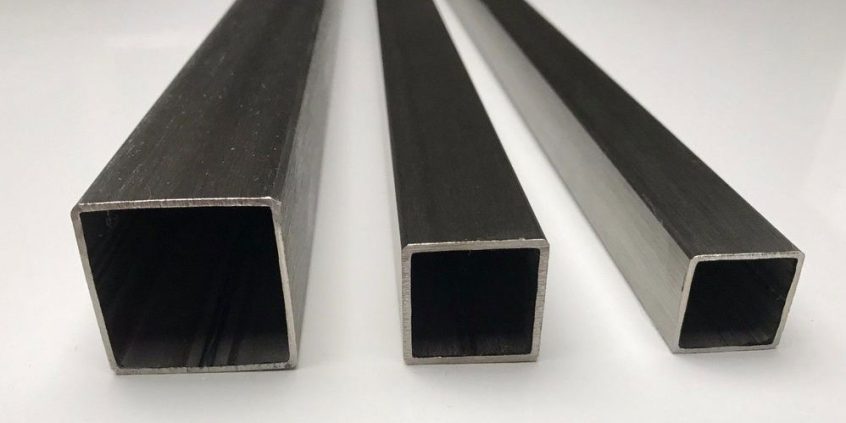
Tubular steel framing
More and more people are exploring RI building options for their garages, barndominiums, warehouses, and agricultural structures. Compared to traditional wood “stick-frame” or pole barn structures, prefabricated red iron kits boast several advantages but also have unique considerations.
Steel is significantly stronger than wood, allowing for more compact sections supporting higher loads and longer spans. Additionally, I-beams are not prone to splitting, warping, or pests, such as termites.
Note: All buildings are designed and engineered to meet (or exceed) your local building codes for wind, snow, and seismic loads.
Since metal buildings come as kits, RI structures can be erected faster than stick-frame buildings, minimizing labor and time. They also require less maintenance over their lifespan.
Due to their modular design, RI buildings can be expanded later by adding more 20-foot or 30-foot bays. Tip: If you think this might be a requirement, be sure to specify expandable end walls at the design stage.
The clear-span open interiors allow for highly customized floor plans. Owners can also choose window and door locations and explore color and finish options. Additionally, RI buildings can easily accommodate future expansions by adding a new bay.
Depending on size and complexity, red iron buildings can be erected in a few days to weeks, thanks to prefabricated parts and minimal field modifications. RI construction can also be completed in a range of weather conditions.
Steel is 100% recyclable, and RI beams are often manufactured with recycled steel. At the end of its life, the structure can be recycled or repurposed.
When building out the interior, you have a couple of options. You can either frame out a second level with steel or wood studs, as you would typically frame the interior of a traditional building, or you can opt for a steel mezzanine level for a second-level office or storage space. More info on steel building interiors here and here.
For more, see our article on the advantages of pre-engineered steel buildings.
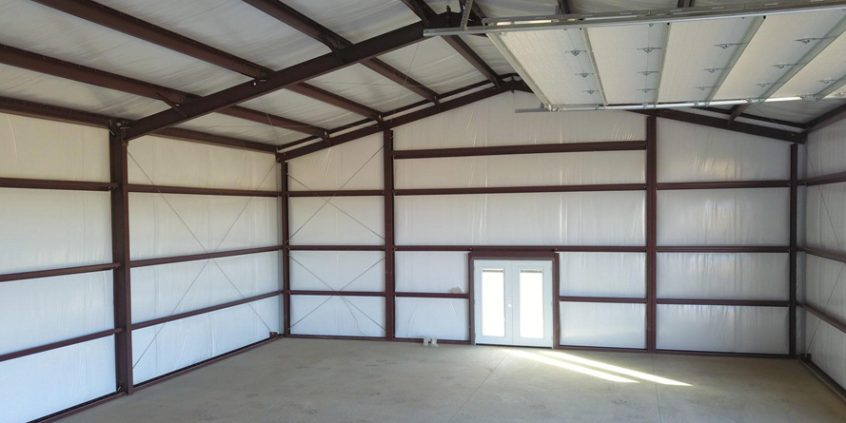
Red iron metal buildings can have limitations in terms of architectural complexity compared to other construction options. They may also require additional materials or labor to achieve specific design elements.
Initially, the cost of this solution might seem high. However, you eventually offset this because there will be very few maintenance and repair requirements.
The steel structure can amplify sounds and vibrations, which might be disruptive in specific settings, such as churches and other community spaces. Soundproofing measures may be necessary to mitigate this issue.
Before construction can begin, the owner must first install the concrete foundations and associated anchors for the columns. These are not part of the building kit package and must be designed by a licensed engineer and installed in the correct location and on properly prepared subgrade prior to erecting the kit. For more information on foundations and anchor bolts.
In addition to requiring footings and anchor bolts, RI buildings will likely require a lift, crane, or other heavy machinery to erect the frames. Owners should be ready to engage a knowledgeable crew or be comfortable with the process and safety measures.
Unprotected steel can be prone to corrosion. This is especially a concern for structures along humid coastlines, in northern climates with snow and deicing salts, or with uses associated with humidity or chemicals. Owners can mitigate corrosion by applying and maintaining protective coatings and minimizing exposure to moisture, snow, or chemicals.
Logically, the bigger the building, the higher the cost. Still, red-iron buildings are an economical option per square foot because their standard rectangular footprints help streamline design and production. Plus, their trademark large clear spans allow for incredible flexibility in interior floor plans.
Not sure what size you need? Here are some standard sizes and how they might be used.
30×40 red iron buildings
A 30×40 building is one of our most versatile structures, sought-after sizes, at 1200 square feet. This compact, cost-effective structure can accommodate everything from a garage to an agricultural barn to a small family home.
40×60 steel buildings
A 2400-square-foot RI building is great for a large shop, office warehouse, or a 4-bedroom barndominium.
50×100 steel buildings
Commercial entities for warehouses and office buildings most often request this 5000-square-foot footprint.
Warehouses: Modern warehouses and distribution centers. This is where RI buildings shine. They offer big, open spaces, making them a great option for storage and distribution centers.
Garages and shops: With their wide-open spaces and rafterless roof systems red iron shops are a popular choice for both commercial and hobby applications.
Residential building construction: RI buildings are quite flexible in terms of use. You can use them to create a space that serves as a stylish metal home. They provide a strong and cost-effective solution for residential construction.
For additional details, see our page on metal building prices
As you’ve probably guessed, final costs can encompass quite a range. Let’s take a look at some of the factors that affect cost, other things you should include in your budget, and ballpark figures on what you might pay.
These are just some of the ways location can affect the final price of your metal building. While many of these may be out of your control, a basic understanding of your regional factors can help inform your decisions.
When budgeting for your building, make sure you are taking a comprehensive look at what will go into the total cost.
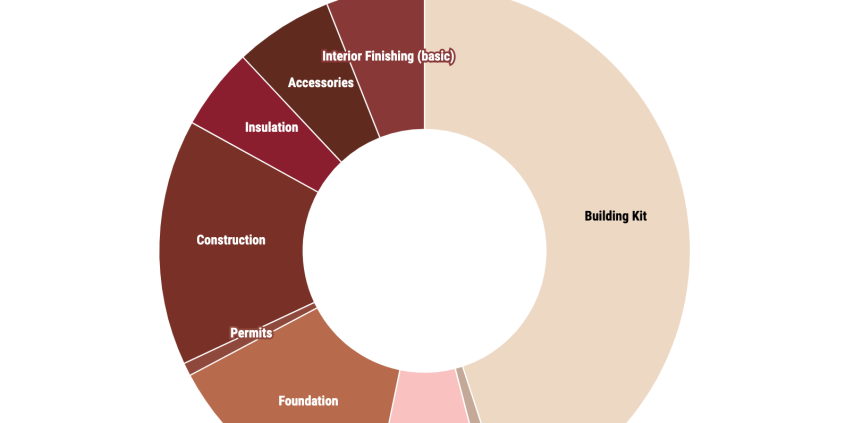
The building kit price (see table above). The primary cost will be that of the pre-engineered metal building kit.
The current price of steel. Because it is a commodity, its price can fluctuate (sometimes wildly).
The level of customization required. How many doors will you need? Will you need insulation? Will a second level be required?
Permitting. Contact your local jurisdiction to determine permit and inspection requirements and fees. Start early, as this process can take time. On average, building permit fees range from $550 to $2,000.
Site preparation. Determine how much work will be required to clear, level, and install utilities on your site. Tapping into existing water, sewer, electric, or gas utilities will also come with a fee.
Foundations. As mentioned previously, foundations and anchor bolts for metal buildings must be designed by a licensed engineer and professionally installed. You should allow $4 to $8 per square foot for a concrete slab foundation.
Labor and installation. Consider how you will assemble the building and research labor and equipment costs. Installation can cost from $5 to $10 per square foot.
Insulation. Here are some rough installed estimates for the most common types of metal building insulation:
Fiberglass batts or rolls – $0.7 – $2.5 /sq ft
Spray foam insulation – $2.5 – $4.5 /sq ft
SIP panels- $5 – $10 /sq ft
Negotiating with suppliers
As with any big purchase, you probably shouldn’t just go with the first manufacturer you find without more research. To find the best deal, it’s wise to shop around and get multiple quotes. Finding manufacturers and making cold calls can feel overwhelming, but with Buildings Gudies, you can enter your information and get four free quotes from manufacturers in your area.
Avoiding hidden costs
One of the biggest surprises for potential RI building owners is the list of costs beyond the metal building ‒ permitting, foundations, site prep, utility connections, and more. But if you’re still reading this article, you’re already ahead of the curve! Hopefully, you’ve gained a solid understanding of what to expect so you won’t be caught off guard by unexpected costs.
Red iron structures offer a durable and cost-effective solution for a wide range of projects, thanks to their efficient designs, easy-to-assemble kits, and long lifespan.
While factors like size, geographic location, and site preparation can influence the total cost, RI buildings offer a rugged and competitive ‒ if not cheaper ‒ alternative to traditional wood stick-built structures.
If you’re looking for a building that combines strength and durability with flexibility and efficiency, a steel structure could be the perfect choice.
Let us help you find the best building solution for sale ……
To learn more about how a red iron building can work for your project or to receive personalized quotes from four leading suppliers, our team is ready to help you find the best solution from our network of trusted manufacturers.
For a comprehensive list of PEMB terminology, see our steel building glossary page.
Red iron is actually steel. Specifically, it’s steel that has been coated with a rust-inhibiting primer that gives it a red color. This is used in construction, especially in beams and columns. The coating helps protect the steel from corrosion, so it can last longer when used in buildings and other structures.
Yes, red iron can rust. It refers to steel with a red rust-inhibiting primer, which is meant to protect the steel during handling and construction, but it is not rust-proof.
Moisture can get to the underlying steel and rust it over time, especially if the primer is scratched, damaged, or exposed to harsh weather conditions.
Regular maintenance, such as periodic inspections and touch-ups on the primer and paint, can help prevent steel from rusting and prolong its structural life.
Steel beams are often coated in red oxide primer, which provides corrosion protection and enhances paint adhesion. This red coating facilitates easier visual inspections, boosts safety by increasing visibility during construction, and helps identify structural components swiftly. The primer also ensures the steel’s longevity and durability in various environments.
Red oxide is iron oxide (Fe2O3), a rust-coloured compound used as a pigment and in rust-preventative primers. Red oxide primer is popular in the construction and manufacturing industries for coating steel. This primer has good adhesion and protects the metal from corrosion and rust, making it suitable for indoor and outdoor use.
Steel-framed buildings typically last 50 to 100 years and are influenced by material quality, construction standards, maintenance, environmental conditions, and design. Properly maintained structures in less corrosive environments with high-quality steel and efficient designs have the most extended lifespans, offering a durable and cost-effective solution for virtually any application.
Let’s start with a quick look at the somewhat confusing terminology surrounding both construction options. Poles Barns – AKA: pole
There are several factors that can greatly affect the cost of constructing a modern warehouse facility. These include the location,
The cost of constructing a commercial building can vary significantly due to many factors. This introductory article explores the key
BuildingsGuide simplifies the process of finding reputable suppliers of prefab metal buildings, allowing you to select the ideal vendor for your needs and budget.
Since 2004, over 200K buyers have saved an average of 28% on their project with our multiple quote service.
Proudly serving customers in the United States & Canada for over 20 years.
Let us help you find the best deal on a metal building for sale.
BuildingsGuide offers a full range of custom metal buildings throughout the USA and Canada. Our metal building kits include garages, workshops, metal homes, shop houses, and other steel buildings. For metal and steel building kit packages, there’s no better partner than BuildingsGuide. Depend on us for customizable steel and metal buildings with fast delivery and limited installation nationwide.