- /
- Design Ideas
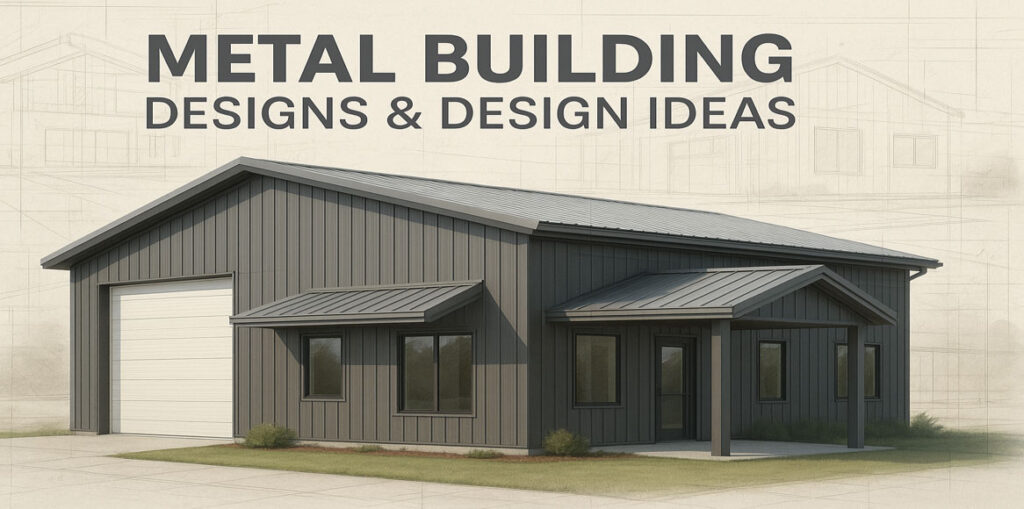
Metal building designs & design ideas
To help you visualize the various options available when designing your building, we have produced a series of sample designs that include some of the most popular customization options.
Please note, renderings are for inspiration only. All buildings are designed and engineered to YOUR specifications. For interior finishing, you will need to engage local contractors.
Experiment with the pre-designed buildings below or start your design from scratch with our intuitive, online 3D Metal building designer
Barndominium Designs
Get Four Building Estimates
Compare prices from local suppliers and save
Metal Garage Designs
Get Four Building Estimates
Compare prices from local suppliers and save
Metal Shop Designs
Get Four Building Estimates
Compare prices from local suppliers and save
Shop House Designs
Get Four Building Estimates
Compare prices from local suppliers and save
FAQs
Do I need a building permit?
Yes, in most cases, especially within city limits. Some jurisdictions and properties on farmland can be exempt. Be sure to verify the details of your chosen job site.
Some key points to consider:
First, ensure your plans comply with local zoning ordinances, then apply for a building permit. Larger buildings or those with more occupants face stricter regulations.
Submit certified plans. Building officials require third-party certified plans for the structure and foundation, which a reputable manufacturer will provide.
Understand zoning. Determine if your site is zoned commercial or residential and understand specific requirements.
Plan for permit processing. The permit application process can be lengthy. Expect it to take 1-3 months.
Prepare an official site plan. A licensed surveyor or structural engineer should design an official site plan for the permit applications.
Keep building permits on-site. Once you have the necessary permits, keep them ready for any required inspections at the job site.
Adhere to approved plans & designs. Inspectors will reference the certified blueprints throughout construction. If design changes occur, submit new certified plans and apply for new permits to avoid delays and fines.
Why must doors and windows be 2' from corners and the roof eave?
Maintaining a 2-foot distance for doors and windows from the corners and the eave of a steel building’s roofline ensures structural integrity, safety, compliance with building codes, and practical construction considerations.
Support and stability: corners provide critical support, and keeping framed openings away from corners guarantees stability.
Load distribution: A two-foot distance also ensures even load distribution, preventing structural issues.
Foundation stability: This prevents compromising the foundation and framing during high wind or snow loading.
Ease of construction: Simplifies the installation of doors and windows
Insulation and energy efficiency: The corner and eave areas are critical for the building’s thermal envelope. Keeping openings away from these areas allows continuous insulation in these high-heat-loss areas. It also prevents thermal bridging at structural connections, improving the building’s overall energy performance.
Weather protection: placing openings away from corners helps prevent water from seeping in and allows for sound flashing installation around openings, reducing exposure to wind-driven rain in vulnerable corner/eave areas.
Clearance for framing: A minimum 2-foot clearance allows room to frame and support the door or window opening correctly. This space is needed to fit wall girts between the corner column and the door/window jamb.
Our manufacturers often recommend adding 8-10 inches to the minimum 2-foot distance for buildings with bypass sidewalls to account for the bypass girt depth.
What are my options for installation?
When it comes to erecting your building, you have three options.
Do-it-yourself (DIY). We only advise going this route on smaller buildings (under 2,000 square feet) and if you have previous construction experience.
Self-manage. With a self-managed project, you are responsible for hiring and managing the various sub-trades, including the concrete company for the foundation, the steel erectors to construct the kit, plumbers, electricians, etc.
Hire a General Contractor (GC). For a completely hands-off option, you may want to consider hiring a GC who will manage the entire project on your behalf, from pulling permits and installation to the final inspection. Expect to pay 10-20% for the services of a GC.
What is the process for designing & erecting a metal building?
Step-by-Step: Metal Building Design Process
1. Define Building Use & Size
- Purpose: Determine if it’s for storage, living, commercial, agricultural, etc.
- Dimensions: Set width, length, and height (e.g., 30x40x10 or 40x60x14).
- Clear Span vs. Multi-Span: Choose based on interior space needs and budget.
2. Site Planning
- Location: Assess site accessibility, grading, and soil conditions.
- Zoning: Confirm land use compliance (residential, agricultural, etc.).
- Setbacks & Easements: Understand local codes for how close you can build to property lines.
3. Design Customization
- Roof Style: Gable, single-slope, or monitor.
- Roof Pitch: Standard is 1:12 to 4:12; steep pitches offer more loft space.
- Doors & Windows: Layout of roll-up doors, walk doors, windows, and skylights.
- Insulation: Choose from vapor-barrier only, fiberglass blankets, or spray foam.
- Interior Layout: Plan for offices, mezzanines, restrooms, or bedrooms and living spaces for residential metal homes & barndominiums.
4. Select Building Materials
- Panel Profiles: Choose ribbed panels (e.g., 36″ coverage, ¾” rib height).
- Colors: Select from pre-painted roof/siding color options.
- Trim & Accessories: Gutters, overhangs, wainscoting, and venting.
5. Engineering & Local Building Codes (all handled by your chosen supplier)
- Load Calculations: Snow, wind, and seismic loads per location.
- Building Codes: Ensure compliance with IBC, ASCE, and local codes.
- Stamped Drawings: Required for permitting and inspection.
6. 3D Design & Drafting
- 3D Modeling Tools: Use online tools to visualize the building (e.g., BuildingsGuide 3D Designer).
- Drafting Plans: Floor plans, elevation drawings, and foundation plans.
- Design Revisions: Tweak layout and details before locking in.
7. Submit for Pricing & Permits
- Compare Quotes: Get bids from metal building suppliers or general contractors.
- Permit Application: Submit engineered drawings to your local building department.
- Site Survey: May be required depending on the municipality.
8. Final Engineering & Fabrication
- Final Approval: Sign off on drawings before fabrication.
- Manufacturing: Components are precision-cut, pre-drilled, and delivered as a kit.
Add-Ons & Customization Options
- Mezzanines
- Lean-tos or porches
- Solar-ready roofing
- Interior framing for drywall or partitioned areas
Pro Tips
- Work with an experienced metal building supplier who provides stamped engineering drawings and one who will guide you through the entire design process.
- Use 3D design tools & floor plan apps to test layouts before committing.
- Always verify local permitting requirements before you finalize the building specifications.
Further reading
The cost of constructing a commercial building can vary significantly due to many factors. This introductory article explores the key
There are several factors that can greatly affect the cost of constructing a modern warehouse facility. These include the location,
Let’s start with a quick look at the somewhat confusing terminology surrounding both construction options. Poles Barns – AKA: pole
Why choose us?
BuildingsGuide simplifies the process of finding reputable suppliers of prefab metal buildings, allowing you to select the ideal vendor for your needs and budget.
Since 2004, over 200K buyers have saved an average of 28% on their project with our multiple quote service.
Proudly serving customers in the United States & Canada for over 20 years.
Compare & save!
Let us help you find the best deal on a metal building for sale.
- Tell us about your project
- We match you with vetted suppliers
- You receive four competing quotes
- Select the most suitable supplier
- Start your project