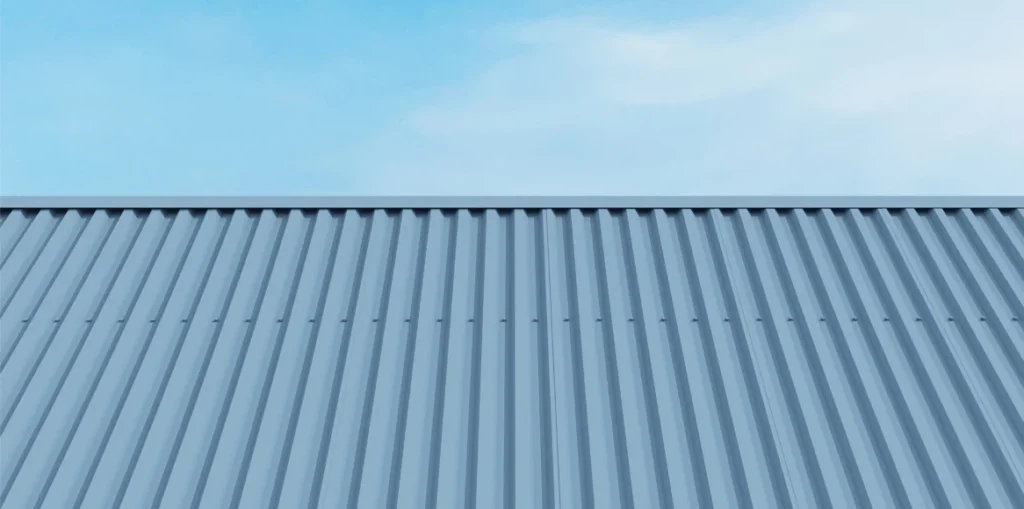
There are several popular roof configurations for metal buildings, with pros and cons to each. Considerations include the intended use of the building, cost, suitability for local weather conditions, and your personal preference on style.
There are two main classes of this structural roofing system: through-fastened and concealed fastened.
This roofing type is similar to the wall siding described on our metal building siding page. It is the most used and least expensive metal roofing and benefits from fast and simple installation.
A through-fastened roof panel is one where the roof panels are attached directly to the sub-structure with fasteners (treated screws) that penetrate through the panel sheets and into the roof purlins. After installation, the fastener locks the wall panel’s overlapping sections into place and is visible on the panel’s outside face. Through-fastened systems are also known as exposed fastener systems.
Through-fastening is typically used for buildings less than 60’ in width (measured in the direction of the roof slope). For larger buildings, stresses resulting from temperature expansion and contraction of exposed metal become more pronounced and more of a risk. As a result of the movement, through-fastened metal roofing panels can wear around the fasteners, leading to leaks.
Pros of Through-fastened roofing
Cons of Through-fastened roofing
The most popular through-fastened panel choice for metal buildings is known as the PBR panel
The PBR metal panel (a type of R panel) is a versatile paneling product that can be used for various agricultural, commercial, industrial, and residential applications. PBR panels are highly customizable to suit any need – from different coatings, color options, and substrates.
PBR panels are special through-fastened roofing panels made of 26-gauge steel. All our suppliers include this panel as part of the standard building kit package (24-gauge is also available as an upgrade option).
PBR panels overlap where the panels meet, providing a larger joint, resulting in better leak protection against wind-driven rain or snow. The greater overlap also protects against snow or wind load and the weight of anyone walking on the roof.
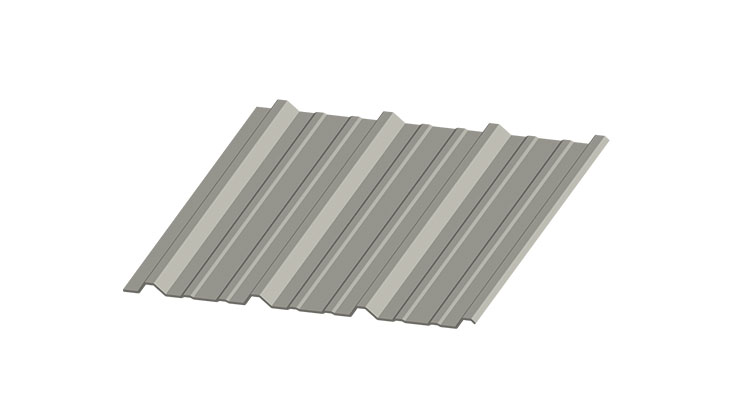
Through Fastener Metal Roofing Panel (PBR Panel)
Credit: Star Building Systems
For buildings wider than 60’ (again, measured in the direction of the roof slope), standing seam roof panels are a popular roofing option. Standing seam roofs are installed on approximately 50% of all new commercial and industrial low-rise metal buildings.
There are no screws on the outside penetrating the panels, giving maximum weather-proofing. The overlap seam is above the roof deck, further enhancing the weather-proofing.
All the attachment is underneath the panel itself, attached to the purlins indirectly utilizing concealed steel clips with movable tabs. The clip bases are fastened to the purlins, while the roofing sheets are rolled around the tabs and can slide with the tabs relative to the clip bases – and the purlins. The result – the panels can expand and contract freely with temperature variation, giving both greater weather-proofing, rigidity, and longevity.
Pros of Standing Seam roofing
Cons of Standing Seam roofing
This roofing system is also referred to as architectural roofing and is better suited for buildings with high aesthetic value, e.g., office, community, and commercial structures.
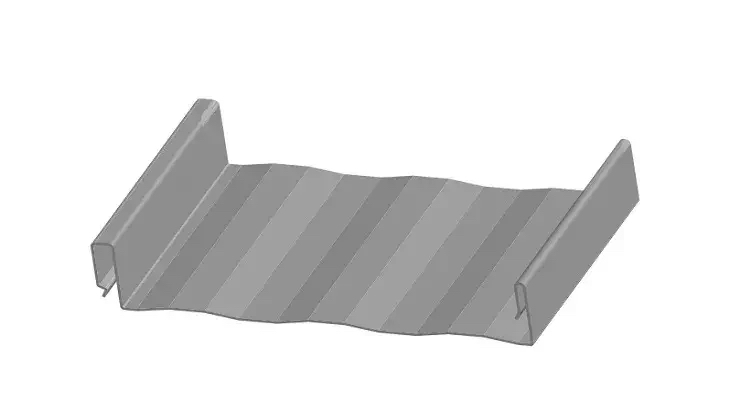
Standing seam roof panel
Credit: MBCI
Another panel option worth mentioning is the insulated standing seam roof panel. These panels provide excellent thermal R-values, which contribute to the energy efficiency of the building.
The panels consist of metal skins with a steel surface and an insulating foam core (usually either PIR or PUR foam)
Insulated panels are perfect for commercial, industrial, and institutional industries because they provide an unmatched weathertight seal and service life. They provide fast and simple installation and durable, dependable performance thanks to the most recent composite roof panel construction innovations.
Thermal properties, design flexibility, quick installation time, and great looks are why insulated roof panels are popular on modern commercial metal buildings.
Advantages:
Disadvantages:
Please see our page on metal building colors for details on metal roof color options.
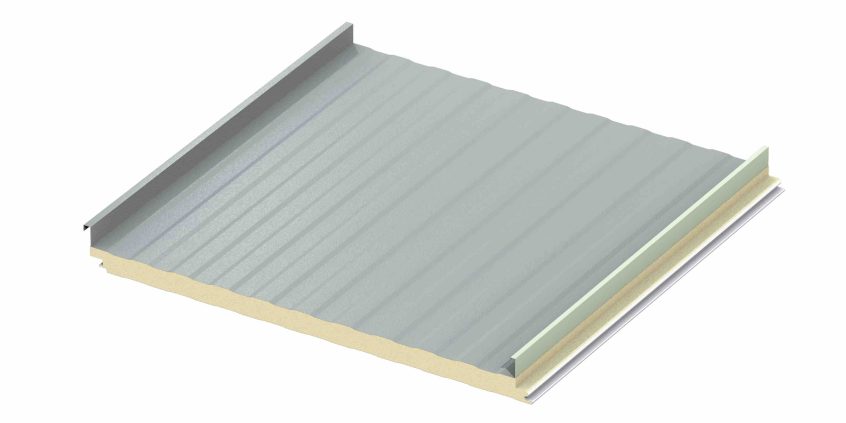
Insulated standing seam metal roof panel
Credit: MetlSpan
Visualize your ideal structure with our intuitive metal building designer
Skylights are an excellent way to add natural light to a building while also boosting its energy efficiency. They have improved enormously from the old-school, simple lay-in fiberglass panels that might come to mind.
This free light source could be a worthwhile investment, as you could greatly reduce your lighting costs. Natural lighting tends to increase employee satisfaction and reduce absenteeism. Skylights also enhance the value of your building for a possible future sale.
In metal building systems, skylights are typically produced by substituting translucent fiberglass or polycarbonate panels for the steel roofing panels. Fiberglass panels are the most cost-effective, but polycarbonate panels are often used when something stronger than fiberglass is required. Skylights for metal buildings are also available as insulated skylight panel units, with appropriate seals around the perimeter to prevent water intrusion.
Some manufacturers call these “roof-lights.” Translucent panels can also replace some wall panels to produce “wall-lights.” Skylights are typically positioned on either side of the roof’s peak, which is why they are often sold in pairs. The optimal number of skylights will depend on the building size and use.
Modern polycarbonate skylight panels (as distinct from built skylight units) have several key benefits; they:
And they are very easy to install on a metal panel roof.
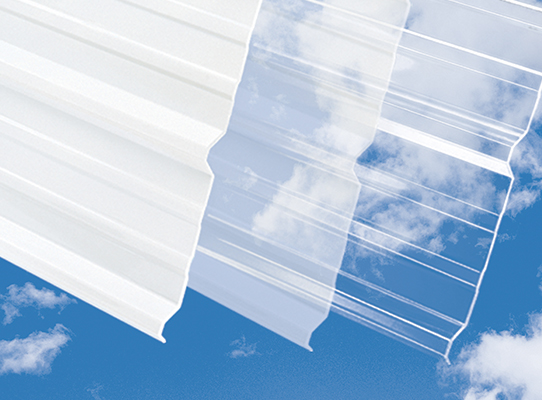
Polycarbonate skylight panel
Credit: H&F Manufacturing Corp
Roof slope is expressed by the “roof pitch,” which is the number of inches of rise in 12 inches of horizontal length—with a colon between the two numbers. For example, a roof with a pitch of 2:12 (“two in twelve”) means that it rises two inches vertically for every 12 inches horizontal (or two feet for every 12 feet horizontal). The most common standard pitches are 1:12 and 2:12, with 3:12 and 4:12 also available. Roof pitches greater than 5:12 require custom engineering; pitches up to 12:12 can be accommodated.
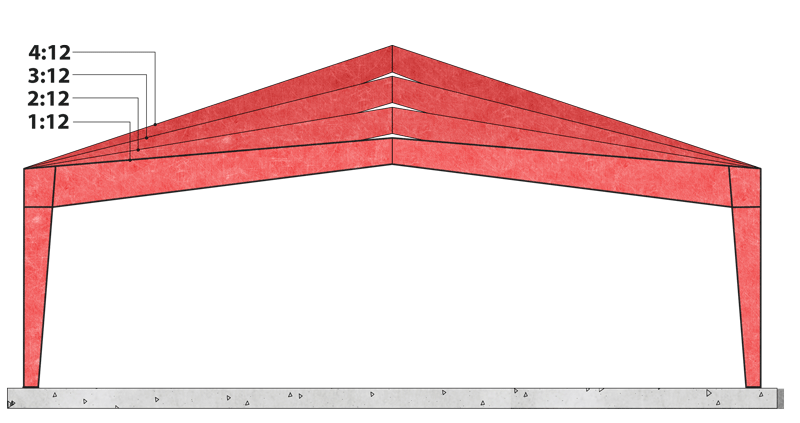
Roof Pitch (1:12 – 6:12)
Credit: BuildingsGuide ©
A standard (most popular) gabled-roof metal building has a roof pitch of 1:12 (nearly flat). The vast majority of large industrial and commercial metal buildings have this pitch of roof. Low-pitched roofs allow you to heat and cool the space more efficiently due to the reduced air volume.
Buildings with higher-pitch roofs utilizing colored metal roofing may provide better architectural appeal (particularly for residential applications).
Snow load is another consideration if your building will be in an area with significant snowfall. A steeper roof pitch will shed snow better.
The shape of the roof can be designed based on:
The most popular, easiest roof to install, and most economical roof design option is the gable-style roof.
The gable roof design features two sloping sides that meet at the ridge (top). Many people refer to this as a pitched or peaked roof.
This roof style is practical, cost-effective, and attractive. You can achieve a very low pitch (1:12) or a very high pitch with this roof style (8:12). Most steep pitches are used to counteract heavy snow loads or achieve a certain aesthetic appeal. The adaptability of the gable roof allows it to be employed in any region or climate.
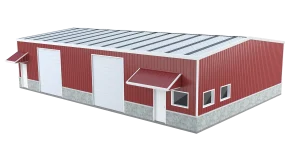
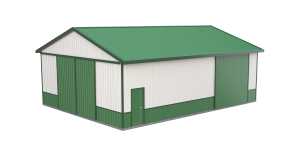
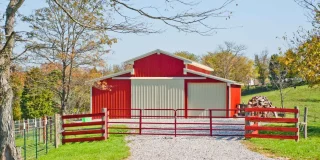
Gable-roof buildings are an excellent solution for garages, shops, barns, warehouses, and residential metal homes and shop houses.
A standard package for metal buildings will come stock with a low-pitched roofline with a gable frame style. Normally, commercial buyers choose between 1:12 and 4:12 ratios when choosing the pitch of their roofline.
Available roof pitches: 1:12 to 6:12.
Like the gable roof, a hip roof slopes from the sides to the peak. But a gable roof has vertical front and back surfaces, while the hip roof front and back also slope to the peak.
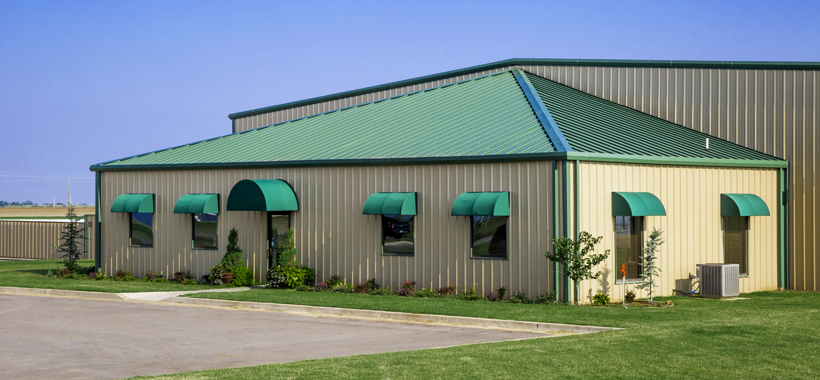
Metal Hip Roof
Credit: Metal Carports Direct
A Quonset hut Building could be a great choice for those seeking simplicity and a low price point. For generations, Quonset huts have been meeting the needs of the military, industry, and backyard hobbyists seeking safe, dependable, and economical storage space. They are so easy to erect that 75% of Quonset buyers choose to DIY build.
Quonset buildings (a.k.a. arch buildings) can be great for business, industry, modern farms, and families. They are suitable for barns, food or machinery storage, hangars, stables, and even homes.
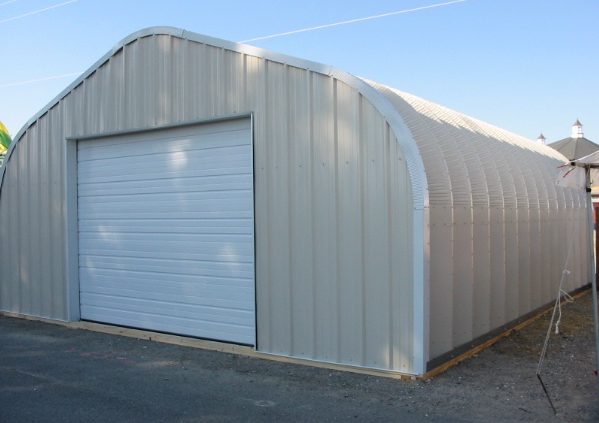
Quonset-style building
To calculate the pitch on a steel building roof, you will need to know the rise and the run of the roof. The rise is the vertical measurement from the top of the roof to the point where the roof meets the wall. The run is the horizontal measurement from the top of the roof to the center of the building.
To calculate the pitch, divide the rise by the run and then convert the answer to a ratio. For example, if the rise is 4 feet and the run is 12 feet, the pitch would be 1/3 or a “4 in 12” pitch.
The roof trim on a metal building is typically called a “ridge cap” or “ridge cap trim.” It is a trim piece that is used to cover the seam where two roof panels meet at the peak or ridge of the roof. It is designed to protect the seam from water infiltration and to give the roof a finished, professional look. Ridge cap trim is typically made of the same material as the roof panels, such as Galvalume, Galvanized steel or aluminum.
There are several ways to reduce the noise of a metal roof on a metal building. Some include:
Insulation: Installing insulation can help to absorb sound and reduce noise.
Acoustic barriers: Installing an acoustic barrier, such as foil-faced insulation or a mass-loaded vinyl barrier, can also help to reduce noise.
Roof underlayment: Utilizing a special type of roof underlayment such as a synthetic underlayment that is specifically designed to reduce noise
Sound-deadening paint: Applying a sound-deadening paint or coating to the metal roof can also help to reduce noise.
It’s important to note that some of these solutions may not be suitable for all types of metal roofs, so it’s best to consult with a professional before proceeding.
The cost of constructing a commercial building can vary significantly due to many factors. This introductory article explores the key
There are several factors that can greatly affect the cost of constructing a modern warehouse facility. These include the location,
Let’s start with a quick look at the somewhat confusing terminology surrounding both construction options. Poles Barns – AKA: pole
BuildingsGuide simplifies the process of finding reputable suppliers of prefab metal buildings, allowing you to select the ideal vendor for your needs and budget.
Since 2004, over 200K buyers have saved an average of 28% on their project with our multiple quote service.
Proudly serving customers in the United States & Canada for over 20 years.
Let us help you find the best deal on a metal building for sale.
BuildingsGuide offers a full range of custom metal buildings throughout the USA and Canada. Our metal building kits include garages, workshops, metal homes, shop houses, and other steel buildings. For metal and steel building kit packages, there’s no better partner than BuildingsGuide. Depend on us for customizable steel and metal buildings with fast delivery and limited installation nationwide.